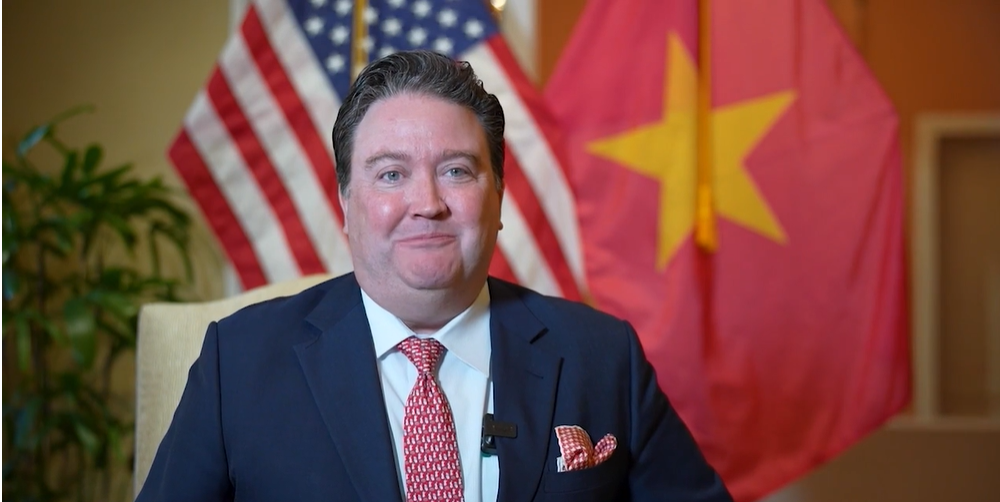
Minister of Culture, Sports and Tourism Nguyễn Văn Hùng gave an interview to VnExpress about solutions to promote Vietnam’s cultural industries, on the occasion of the Lunar New Year of the Dragon 2024.
- Looking back on seven years of implementing Vietnam’s Cultural Industries Development Strategy, which results do you find most notable?

- In many countries, cultural industries are an important part of the economy, generating significant foreign currency revenue through exports. In Vietnam, how is this issue approached?
- At the international level, UNESCO began discussing cultural industries in the late 1970s and early 1980s. Today, cultural industries and the creative economy are drivers of sustainable development. The cultural sector accounts for up to 6.1% of the global economy, with annual revenue reaching 2.25 trillion USD and nearly 30 million jobs.
In 2020, creative services exports brought in 206 billion USD for the United States, 174 billion USD for Ireland, 75 billion USD for Germany, 59 billion USD for China, and 57 billion USD for the United Kingdom. China led the world in exports of creative goods in 2020 with 169 billion USD, followed by the United States (32 billion USD), Italy (27 billion USD), and Germany (26 billion USD).
In Vietnam, culture has long been regarded as belonging to the ideological sphere and as the spiritual foundation of society. Resolution No. 5 of the 8th Party Central Committee (1998) on building an advanced Vietnamese culture imbued with national identity was the first to mention economic policy and the exploitation of culture’s economic potential. Experts from the British Council and UNESCO were among the first to introduce the concept of cultural and creative industries in Vietnam.
During the 2007–2014 period, many international seminars on cultural industries were held under the chairmanship of the Ministry of Culture, Sports and Tourism. However, it was not until 2014, with the 9th Plenum of the 11th Party Central Committee, that the term “cultural industries” was officially included in Party documents and their development was set as a direction. Subsequently, in 2016, the Prime Minister issued the Strategy for the Development of Vietnam’s Cultural Industries to 2020, with a vision to 2030.
Since then, awareness of the role of cultural industries has been further elevated. The recent first nationwide conference on cultural industries has served as a driving force for these sectors to take off.

- Compared with the goal of cultural industries becoming an important economic sector contributing 7% of GDP, current results remain limited. What is your view on this?
- Alongside initial achievements, we must frankly acknowledge that Vietnam’s cultural industries still have many limitations. There is currently no legal document (law or decree) governing state management of cultural industries. Specific and appropriate mechanisms and policies for attracting investment and developing resources to support and promote cultural industries are still lacking.
Investment resources are still dispersed and not yet focused on key subsectors with advantages and potential to create flagship products. The workforce in this sector is also lacking in both quantity and quality due to the absence of adequate incentive and attraction policies. The content and form of products in areas such as software, handicrafts, design, architecture, and fashion have not fully exploited local cultural characteristics to create uniqueness and competitive advantages.
A number of businesses still do not pay sufficient attention to copyright and related rights protection, so violations and infringements in recent years have directly affected creators and hindered investment in the sector. Vietnam is a promising market with a young, open population that is easy to reach, but habits and awareness of respecting, protecting, and developing cultural industry products have not yet been fully formed. Although financing for cultural industries has increased, it remains low compared to actual demand.

- South Korea has reaped significant benefits from culture, especially in film and music. How does Vietnam orient the development of its cultural industries, Minister?
- I believe Vietnam has the opportunity to become a cultural industry hub of Southeast Asia. To achieve this, we need to set the goal of developing cultural industries into an important economic sector contributing 7% of GDP. Cultural industry products and services must develop in a diverse and high-quality manner based on innovation, creativity, traditional cultural values, and respect for copyright, meeting both domestic demand and export needs.
We will study and improve the legal framework to unlock the development of cultural industries, with preferential policies on capital, encouragement for creativity, and support for startups. Three cultural industry hubs in Hanoi, Ho Chi Minh City, and Da Nang will be established soon; the network of creative cities will be expanded to include Quang Ninh, Quang Nam, Kien Giang, Hue, and Da Lat.
The cultural sector will also promote exchanges, joint ventures, and cooperation with countries that have developed cultural industries such as South Korea, Japan, and China; and will add cultural industry indicators to the national statistical system to ensure appropriate investment policies and development roadmaps.
With a young, dynamic population that quickly adapts to global trends, priority sectors will leverage these advantages, such as film. In 2023, the film industry achieved strong commercial growth, with Vietnamese box office revenue reaching 1.08 trillion VND—a historic record.
Vietnam’s software and entertainment gaming sector in 2022 generated 148 billion USD in revenue, with a total workforce of 1.2 million people, making the country the second largest software exporter in the world. The Vietnamese gaming industry earned 665 million USD in 2022, ranking fifth in Southeast Asia and becoming a regional hub for game development and software export.
In addition, Vietnam will also develop performing arts, design, handicrafts, and cultural tourism, building product brands associated with local regions. I hope these industries will make an important contribution to revitalizing and developing the country’s culture.