Facing billion-dollar prospects, Bầu Đức, billionaire Trần Đình Long, and Trần Bá Dương have all entered the agricultural sector, ranging from fruit cultivation and livestock farming to animal feed production.
Mr. Duc receives good news.
In the final days of the year, durian prices have surged sharply. In 2023, durian became the fruit with a record-high export value, leading Vietnam’s fruit and vegetable group and accounting for 51% of the total. China is Vietnam’s largest durian market, making up 97% of the share, reaching nearly $1.9 billion.
According to Mr. Doan Nguyen Duc (Mr. Duc) – Chairman of Hoang Anh Gia Lai Joint Stock Company (HAGL), current durian prices are still very high, with only about 10% of Chinese consumers able to afford it, meaning it is not yet widely accessible.
“Therefore, I believe that over the next 10 years, durian will remain a highly potential crop, with no need to worry about prices,” Mr. Duc stated.
Currently, fruit cultivation is HAGL’s core business segment, in which durian is expected to generate significant profits. It is considered a “high-return” crop, with strong prices both globally and domestically.
HAGL plans to expand its durian cultivation area to 2,000 hectares. In 2024, HAGL’s durian plantations will begin large-scale harvesting, with around 700 hectares expected to be harvested in Q4 2024, contributing to bringing HAGL’s profits to approximately VND 2 trillion. By 2026, the total durian cultivation area will reach 2,000 hectares, of which 1,000 hectares will be ready for harvest. HAGL also has an additional 5,000 hectares available for future durian expansion.
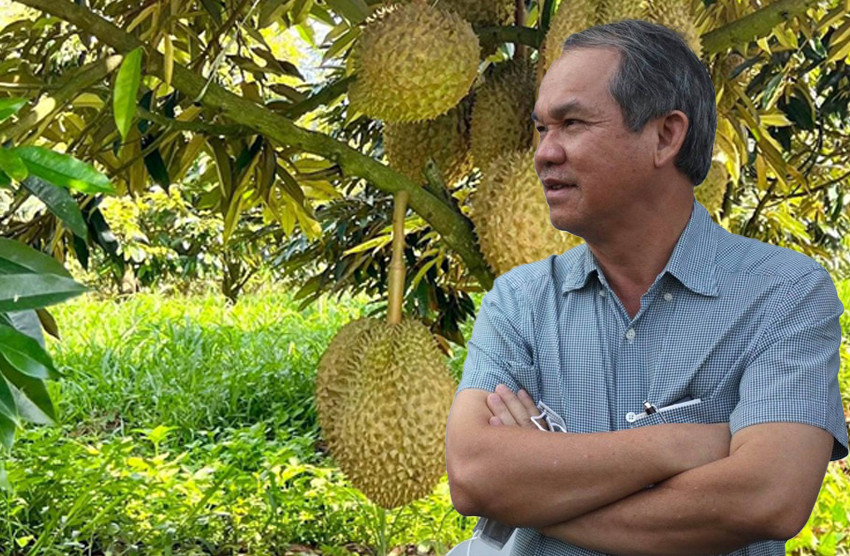

Starting from real estate, then moving into hydropower, in 2013 Mr. Duc unexpectedly announced a shift into agriculture. To carry out investment restructuring, HAGL sold all its hydropower projects and stakes in timber companies to focus capital on agricultural projects.
In 2012, agriculture accounted for only 4.3% of revenue, but by 2013, this segment surged to 38.94% of HAGL’s total revenue. However, investments in agriculture did not seem to deliver the expected results. HAGL had to repeatedly restructure its crops and livestock, and even sell subsidiaries in the sector.
After 10 years in agriculture with various crops and livestock, with durian now as its key product, some forecasts suggest that Mr. Duc’s HAGL could return to generating trillion-dong profits annually.
In 2023, HAGL recorded revenue of VND 6,930 billion and post-tax profit of VND 1,817 billion, marking its highest profit in the past 12 years. With profits rising sharply to the trillion-dong range per year, the possibility of fully repaying its debt by 2026, as shared by Mr. Duc, is considered feasible.
A few years ago, Mr. Duc repeatedly said he felt ashamed in front of friends due to business failures and debt. Now, the once-famous football club owner feels much more at ease as debts have become minimal and the company is profitable. The HAGL chairman stated that he is determined to revive his business for the sake of his reputation.
The dominant “sideways move” of billionaire Tran Dinh Long
The agricultural sector is also considered highly promising by billionaire Tran Dinh Long. He even stated that agriculture has greater potential than the steel industry.
In March 2015, Hoa Phat officially established Hoa Phat Livestock Feed Trading & Production One Member Co., Ltd. with a charter capital of VND 2.5 trillion.
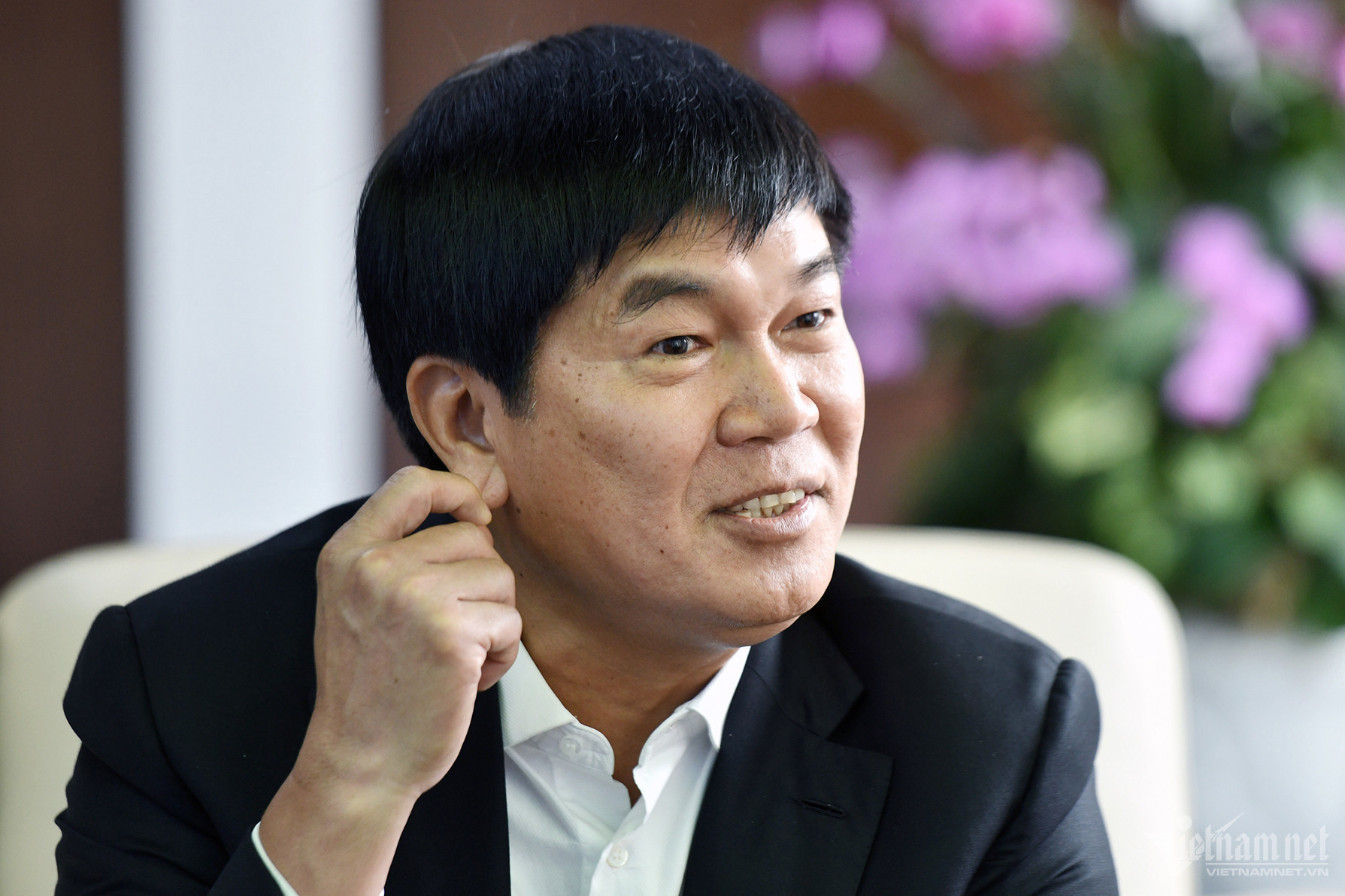
In addition, Hoa Phat has strongly expanded its livestock segment on a large scale across multiple provinces such as Lang Son, Bac Giang, Yen Bai, Hoa Binh, Quang Binh, Phu Tho, Hung Yen, Thai Binh, Dong Nai, and Dak Lak.
To compete in the pork market, Hoa Phat implemented the 3F model (Feed – Farm – Food). The group built its first two animal feed production plants in Hung Yen and Dong Nai, with a total capacity of nearly 600,000 tons per year.
As a result, after six years of operation, Hoa Phat has supplied the market with high-quality breeding pigs and commercial pork from its farm systems across various localities.
In the poultry sector, according to its 2022 annual report, Hoa Phat produces about 850,000 clean eggs per day, maintaining the number one market share in egg supply in northern Vietnam. In 2022, its pork output reached nearly 404,000 pigs, including both commercial pigs and breeding stock.
From 2015 to 2020, Hoa Phat heavily invested in and rapidly grew its livestock segment. By 2020, its agricultural division generated over VND 10 trillion in revenue, becoming the second-largest contributor after its core steel business.
More recently, Hoa Phat Poultry Company (a subsidiary of Hoa Phat Group) announced that in 2023 it produced and sold over 300 million clean eggs, exceeding its annual plan by 10% and increasing more than 17% compared to 2022.
Over seven years ago, when entering the egg business, Hoa Phat set a target of reaching 300 million eggs per year by 2025. The group has achieved this goal two years ahead of schedule.
Currently, its egg products are widely distributed across supermarkets, schools, industrial kitchens, industrial zones, restaurants, and hotels. Hoa Phat eggs have also begun to be exported to countries such as Laos and Cambodia. In August 2023, the company introduced the Hy-Line Sonia breed, a pink-egg-laying chicken imported from the United States.
Hoa Phat’s target for 2025 is to double its 2020 revenue, producing annually 850,000 tons of animal feed, 200,000 Australian cattle, 300 million eggs, and 750,000 finished pigs.
Billionaire Nguyen Dang Quang pours trillions of dong into agriculture.
In 2015, Mr. Nguyen Dang Quang made a new strategic move for Masan by acquiring 52% of shares in Vietnam–France Feed Production Company (Proconco) and 70% of shares in Anco Agricultural Nutrition Joint Stock Company (ANCO), while also establishing Masan Nutri-Science Co., Ltd. (MNS) to own these two companies.
By 2016–2017, Masan announced an investment of VND 1.4 trillion to build a pig farming complex in Nghe An based on the 3F (Feed – Farm – Food) model. This move was seen as anticipating the growing demand for premium food products in Vietnam, driven by rising household incomes, greater health awareness, and modern lifestyle changes. At the same time, Masan also entered into a partnership with Vissan, Vietnam’s largest meat processing company.
Subsequently, Masan developed its own proprietary animal feed brand to integrate into the pork value chain, aiming to deliver high-quality meat products capable of competing in the market.
In 2018, Masan launched the MeatDeli chilled meat brand. The product has become widely available across the WinMart supermarket system, capturing about 2–3% market share and leading the branded pork segment in terms of pricing, with the positioning as “the first European-standard chilled meat in Vietnam.”
In 2023, Masan MeatLife continued to achieve higher revenue and utilization rates thanks to its competitive pricing strategy, helping narrow the price gap between its products and traditional market pork.
The brand recorded revenue of VND 6,984 billion last year, up 10.9% compared to the previous year.
The big play of billionaire Tran Ba Duong
In 2021, billionaire Tran Ba Duong partnered with Mr. Duc by acquiring Hoang Anh Gia Lai Agrico (HAGL Agrico), the agricultural arm of Hoang Anh Gia Lai.
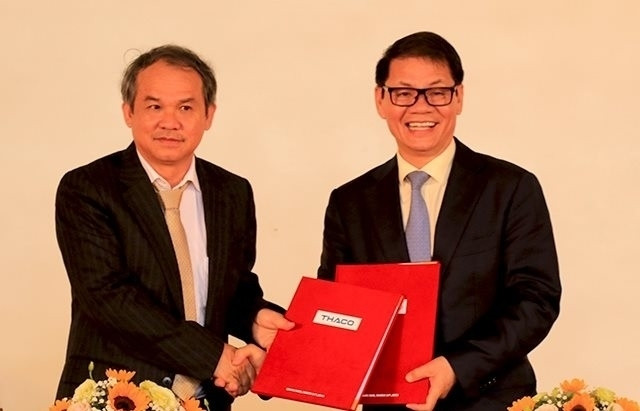
Mr. Duong said that Thaco had spent about VND 8 trillion. To restructure HAGL Agrico entirely, Thaco invested an additional VND 12 trillion. By 2022, Thaco owned 26.7% of shares and took over full operational control of HAGL Agrico, effectively managing 36,050 hectares of land in Laos and Cambodia.
In 2022, the first year HAGL Agrico came under Thaco, business results had yet to improve compared to the period under Mr. Duc, as the company continued to incur losses. Over the two years 2021 and 2022, HAGL Agrico recorded losses of VND 1,119 billion and VND 3,576.5 billion respectively, but this did not discourage the billionaire.
At the beginning of 2023, Mr. Tran Ba Duong announced that he would continue to invest VND 8.2 trillion into agriculture, focusing on organic and biotechnology-based platforms. This demonstrates his confidence in the growth potential of the agricultural sector.
During the 2021–2023 period, under Mr. Duong’s leadership, HAGL Agrico implemented various plans to improve business performance, including upgrading infrastructure, converting inefficient fruit and rubber plantations into banana and pineapple farms, expanding cattle farming, and producing organic fertilizers.
In a recent interview, Mr. Tran Ba Duong stated that Thaco had taken over the operation of HAGL Agrico’s projects in Laos and is determined to develop large-scale agriculture with an integrated, circular approach.