Amid continued volatility in the global economy driven by geopolitical conflicts, inflationary pressures, and the restructuring of international supply chains, Vietnam’s economy has maintained strong growth momentum thanks to robust exports, public investment, and rising foreign direct investment (FDI). Báo cáo kinh tế VN for May 2026 provides a comprehensive overview of the country’s new growth drivers, existing challenges, and economic outlook for the coming period. Below are the key highlights summarized from the report.
Economic Growth Remains Strong
In 2025, Vietnam’s GDP grew by 8% — the highest rate in ASEAN — and continued its strong momentum in the first quarter of 2026 with growth reaching 7.8%. The main drivers were exports, public investment, FDI inflows, and the recovery of the services sector.
Exports in 2025 reached a record USD 475 billion, equivalent to 93% of GDP, with electronics and high-tech products posting particularly strong growth due to the global surge in investment in artificial intelligence (AI). Vietnam has also emerged as a manufacturing hub for technology products and AI hardware in East Asia.
At the same time, tourism and logistics experienced a strong recovery. In 2025, the number of international visitors reached a record 21.2 million, contributing significantly to consumption, retail sales, and employment growth.
FDI Continues to Flow Strongly into Vietnam
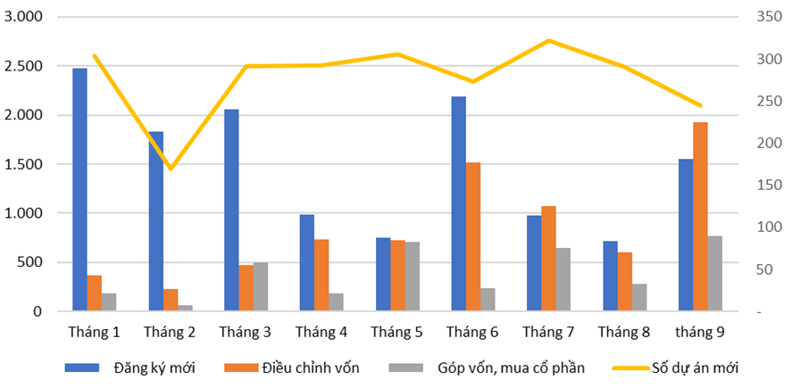
The ongoing restructuring of global supply chains has further strengthened Vietnam’s position as an attractive destination for foreign investment. In 2025, realized FDI reached USD 27.6 billion — the highest level in the past five years — representing a 9% increase compared to the previous year.
In the first quarter of 2026, registered FDI rose by 36%, mainly concentrated in electronics, high technology, and manufacturing industries. South Korea and Singapore remained the two largest investors.
Challenges from the Oil Shock and Global Uncertainty
Despite these positive signals, Vietnam’s economy is facing significant pressure from the Middle East conflict and the global oil price shock. Rising energy prices have increased transportation, logistics, and production costs while also putting pressure on inflation, exchange rates, and foreign exchange reserves.
Inflation rose to 5.5% in April 2026 after fuel subsidy measures were gradually reduced. Meanwhile, the Vietnamese dong depreciated by more than 3% since the beginning of the year due to trade deficits and capital flow pressures.
In addition, business confidence has shown signs of weakening as exporters face declining global demand and rising input costs. PMI surveys indicated that manufacturing activity slowed in April 2026.
The Gap Between FDI Enterprises and Domestic Businesses
One of the major challenges highlighted in the report is the imbalance between the FDI sector and domestic enterprises. FDI companies currently account for around 73% of total export turnover and demonstrate significantly higher productivity, while most domestic businesses remain small-scale, less productive, and struggle to integrate deeply into global value chains.
Following the implementation of new tariffs by the United States, exports from the FDI sector continued to grow strongly, while domestic firms faced greater pressure, especially in textiles, footwear, and wood products.
Outlook for 2026 and Reform Priorities
The World Bank forecasts that Vietnam’s GDP growth could reach around 6.8% in 2026. Although lower than the 2025 figure, this would still represent solid growth amid a weakening global economy.
To sustain long-term growth, Vietnam needs to continue accelerating institutional reforms, developing capital markets, improving the quality of public investment, and strengthening the capabilities of the domestic private sector. The government is currently implementing an infrastructure investment plan worth approximately USD 320 billion over the next five years to address logistics bottlenecks and support long-term growth.
The report also suggests that the current external shocks could become a catalyst for Vietnam to transform its growth model — shifting from one dependent on capital and credit toward growth driven by productivity, innovation, and deeper linkages between domestic enterprises and the FDI sector.