(Chinhphu.vn) – Prime Minister Pham Minh Chinh’s working trip to Europe takes place as Vietnam is becoming a global focal point of attention.
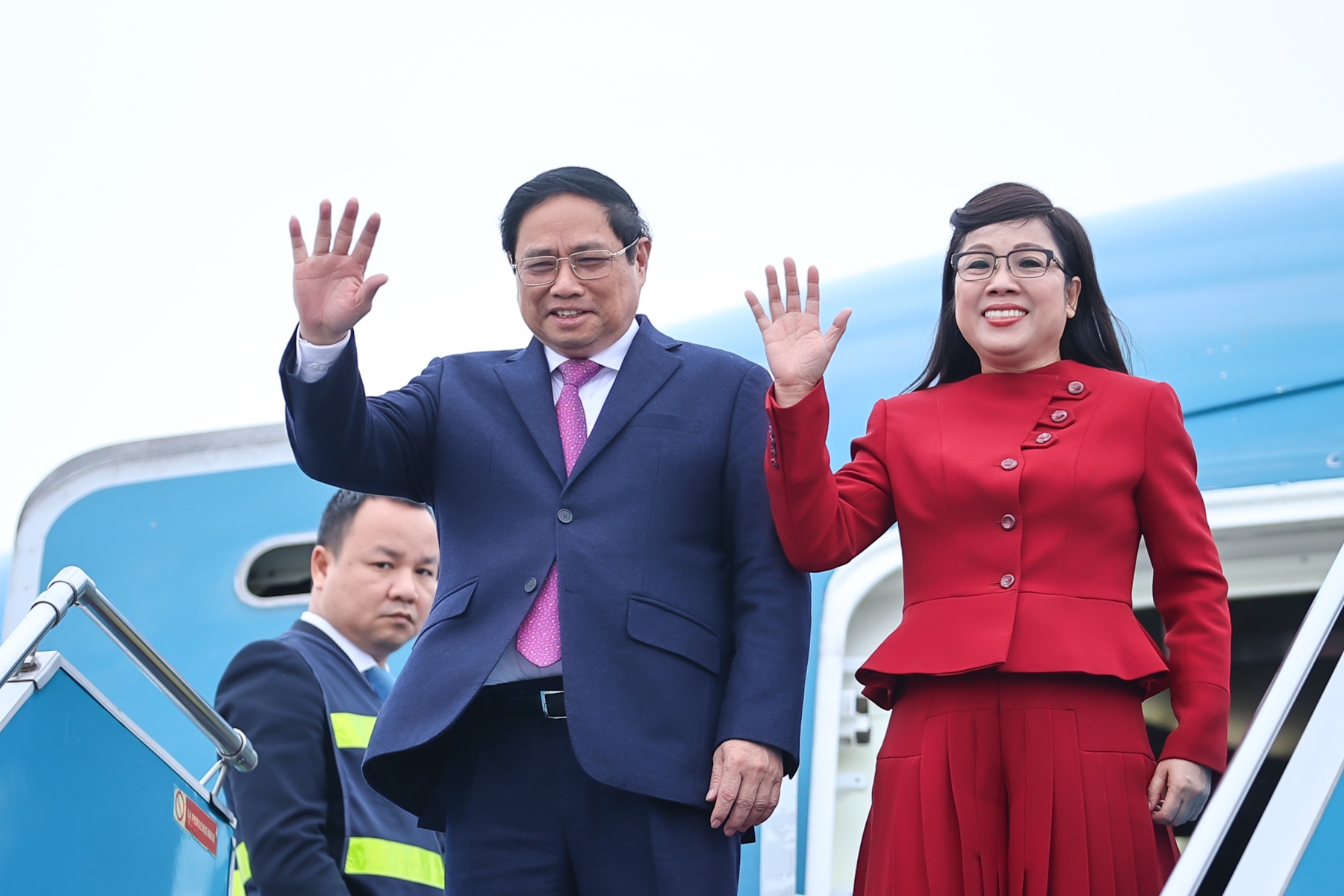
On the morning of January 23, Prime Minister Pham Minh Chinh, his spouse, and the high-level Vietnamese delegation returned to Hanoi, successfully concluding their working trip to attend the 54th Annual Meeting of the World Economic Forum in Davos (WEF Davos 2024) and pay official visits to Hungary and Romania from January 16–23, 2024.
This was also the first overseas trip of Vietnam’s key leaders in the new year 2024, carrying significant importance in both multilateral and bilateral aspects.
The trip took place at a time when Vietnam is becoming a global focal point of attention, especially following the historic diplomatic achievements in 2023 under the wise leadership of the Party Central Committee, directly and regularly led by the Politburo and the Secretariat, headed by General Secretary Nguyen Phu Trong.
It can be said that Prime Minister Pham Minh Chinh made the most of important opportunities during the trip to share information about Vietnam’s achievements and development directions, while strongly promoting and spreading the message, image, and position of a Vietnam with new stature, potential, scale, and prestige.
At the same time, through the trip, the Vietnamese delegation grasped and leveraged new opportunities and trends, mobilizing maximum resources for national development; promoting cooperation in areas of practical interest with the WEF, Switzerland, Hungary, Romania, and other partners; sharing perspectives and visions on global issues; and affirming Vietnam’s proactive, active, and responsible participation and contributions.
Many major international media outlets provided in-depth coverage of the dynamic and effective activities of the high-level Vietnamese delegation led by Prime Minister Pham Minh Chinh. Numerous messages and speeches by the Prime Minister were selected and broadcast globally by leading media organizations.
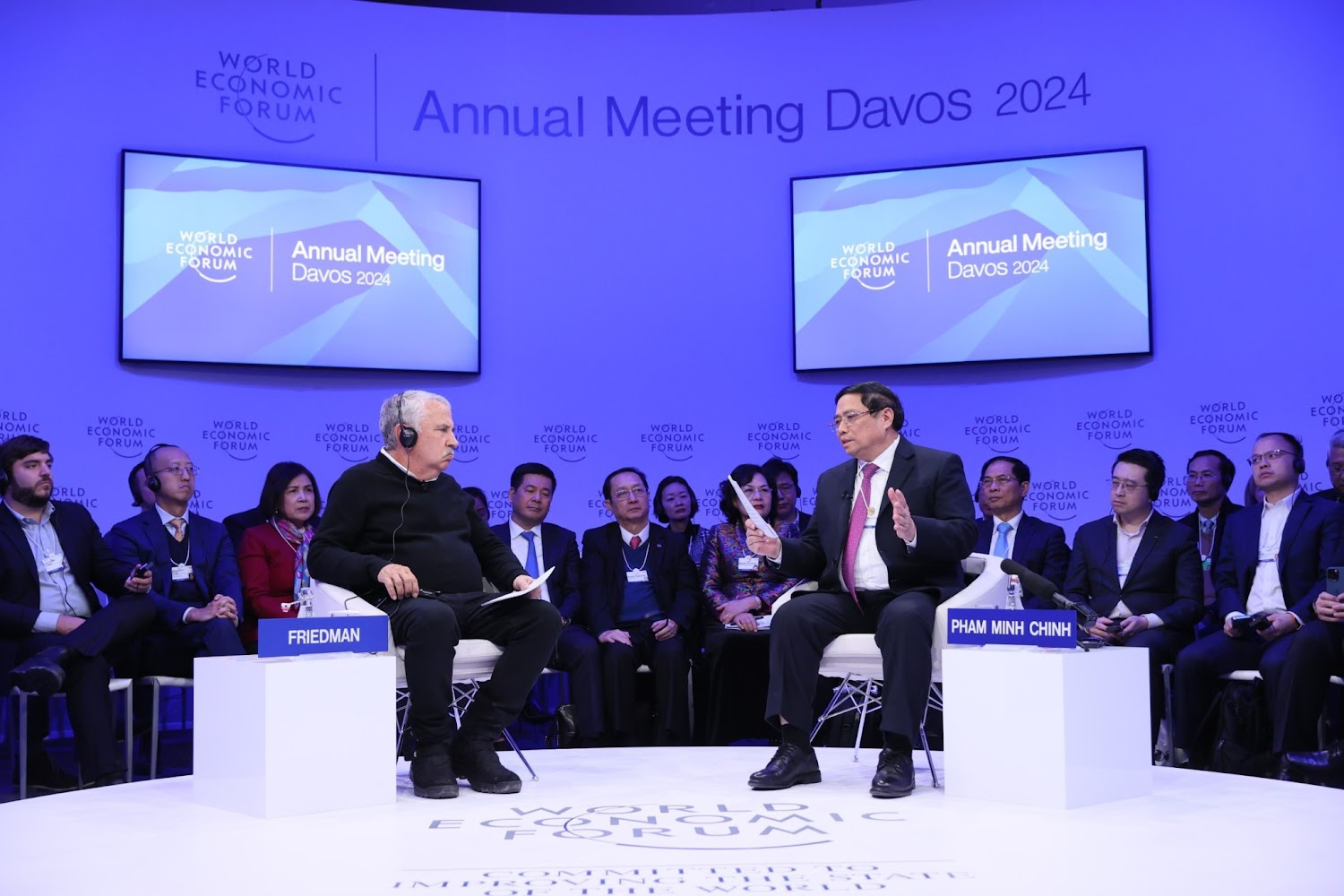
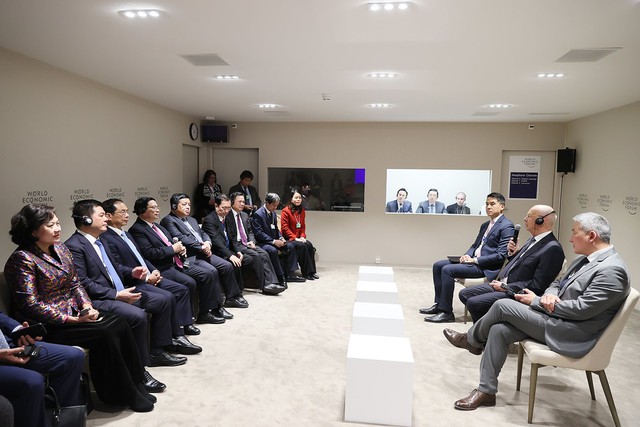
The WEF Davos 2024 Conference was the largest since the COVID-19 pandemic, with the highest number of participating leaders from countries and international organizations to date. Over two days of continuous work with a packed schedule of more than 30 meetings and engagements, the Prime Minister’s trip to attend the conference was highly successful across multiple aspects, fully achieving all set objectives and leaving a strong impression on international friends and partners.
Leaders of countries and international organizations highly appreciated Vietnam’s thinking, vision, and solutions shared by the Prime Minister on promoting international solidarity, upholding multilateralism, building strategic trust, ensuring balanced interests, and advancing a comprehensive, people-centered global approach.
Notably, the conference’s key sessions left a deep impression regarding Vietnam’s outstanding socio-economic achievements, development orientations and strategies, and its independent, self-reliant foreign policy. They also highlighted Vietnam’s responsible and effective contributions to peace and development in the region and the world.
Through this world-leading and highly reputable economic forum, Vietnam was able to capture new ideas and approaches for cooperation, as well as sense the spirit of the times and emerging trends of the global economy. The forum highlighted that the world is entering a new phase of development, with growth drivers powered by artificial intelligence and low-carbon technologies. Leaders emphasized strengthening strategic trust and promoting a balanced approach between cooperation and competition in addressing current global challenges.
The participation of Prime Minister Pham Minh Chinh further contributed to deepening and making more substantive the relationship between Vietnam and the WEF, particularly in specific areas such as establishing a Fourth Industrial Revolution Center in Ho Chi Minh City and supporting the development of new skills for high-quality human resources, thereby creating an ecosystem to enhance national competitiveness.
During the conference, the Prime Minister held more than 20 meetings and engagements with leaders of countries, international organizations, and top global businesses to further strengthen partnerships across various fields, especially in economic, trade, and investment cooperation, as well as science and technology, digital transformation, green transition, healthcare, and intellectual property.
The business community considers Vietnam one of the most suitable choices, an attractive destination for investment and long-term cooperation opportunities. They are impressed by Vietnam’s strategic development vision and the Government’s strong policies and measures to create a favorable investment environment, consistently showing great support for the business community, including foreign investors.
Expressing a desire to continue supporting and accompanying Vietnam in its development and transformation process, representatives of corporations and enterprises showed strong interest in new investment and business opportunities in Vietnam and immediately committed to organizing major business delegations to visit the country in the near future.
It can be said that the trip to attend the WEF created a new wave for high-quality foreign investment cooperation, contributing to refreshing traditional growth drivers and promoting new ones.
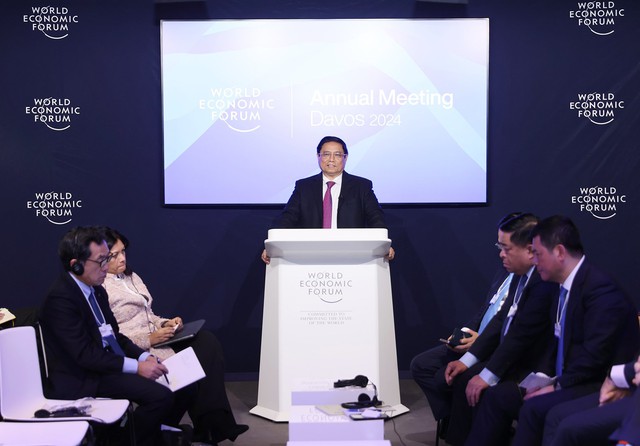
As one of the heads of state and national leaders whom the WEF considers to possess strategic thinking, vision, and inspirational leadership, Prime Minister Pham Minh Chinh was invited to attend several key events at the Forum, such as the Vietnam National Strategic Dialogue, the session “Lessons from ASEAN,” and the policy dialogue “Vietnam: Shaping a Global Vision.” The WEF also noted that Vietnam was among the countries attracting the most attention from the business community at this year’s Conference.
In particular, the policy dialogue “Vietnam: Shaping a Global Vision” was one of eight dialogues with heads of state and government organized by the WEF at Davos this year.
Held at a critical moment, the session helped strengthen cooperation with partners and conveyed a strong message about a dynamic, innovative Vietnam that is an attractive investment destination, a responsible member, and a model in many fields within the international community.
Speaking at these events, Prime Minister Pham Minh Chinh affirmed that transformation, the search for, and the creation of new growth drivers are an objective and inevitable global trend today; no country or economy can achieve fast and sustainable development if it continues to rely on outdated thinking and traditional growth drivers alone.
Regarding new development opportunities such as supply chain shifts, the Prime Minister emphasized that this is an inevitable trend driven by the laws of competition and supply and demand. He also stressed that countries can only achieve sustainable development by adopting a win-win approach, respecting each nation’s choices, and building trust based on sincerity, solidarity, and balanced interests.
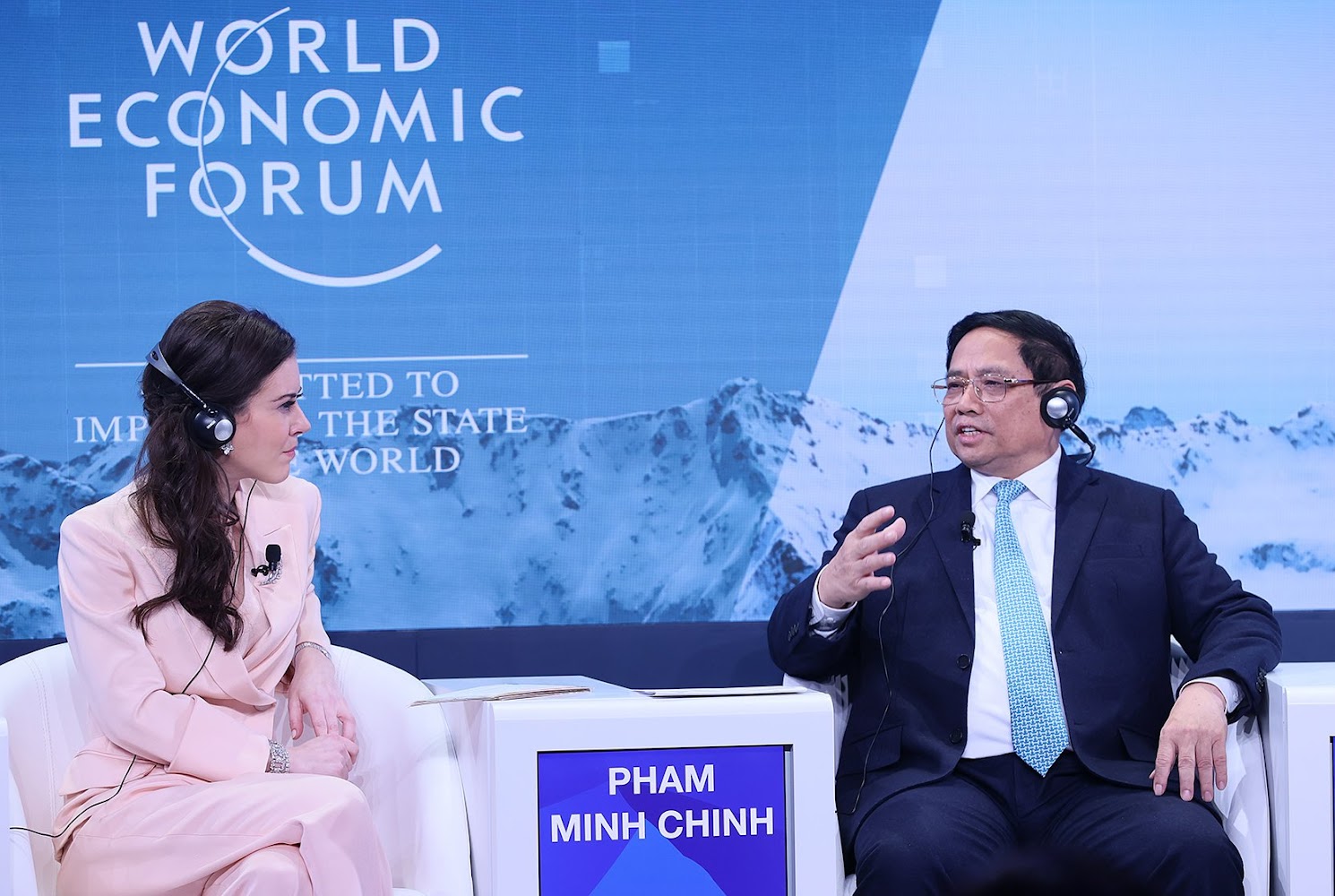
The Prime Minister emphasized that to promote transformation, innovation, and the creation of new growth drivers, Vietnam will focus on four key groups of solutions. First, reviewing and improving institutions and laws with the spirit of creating the most favorable conditions for businesses and investors. Second, focusing on infrastructure development, especially strategic infrastructure such as transport infrastructure, digital infrastructure, and climate change adaptation infrastructure. Third, developing human resources, with an emphasis on high-quality human resources. Fourth, restructuring the economy in association with renewing the growth model, prioritizing the development of renewable energy industries, green transition, digital transformation, semiconductor industry, and innovation promotion.
The Prime Minister affirmed that Vietnam is accelerating transformation, including economic transformation by renewing traditional growth drivers (investment, exports, and consumption) and promoting new growth drivers; digital transformation, green transition, circular economy, sharing economy, and knowledge economy; institutional and policy transformation, building strategic infrastructure for transformation; and human resource transformation.
Alongside this, Vietnam consistently pursues an independent and self-reliant foreign policy of diversification and multilateralization, being a friend, a reliable partner, and a responsible member of the international community; adheres to the “four no’s” defense policy; firmly safeguards independence, sovereignty, unity, and territorial integrity; ensures political stability, social order and safety, and maintains a peaceful and stable environment for development; builds an independent and self-reliant economy associated with proactive and active international integration that is deep, substantive, and effective, continuously enhancing internal strength and economic resilience.
In particular, Prime Minister Pham Minh Chinh openly answered questions about Vietnam’s position on balancing relations with major powers. International commentator Thomas Friedman of The New York Times, author of the book “The World Is Flat,” noted that not many countries are capable of balancing and maintaining good relations with both superpowers, the United States and China, especially as U.S. President Joe Biden recently visited Vietnam and, shortly thereafter, Chinese General Secretary and President Xi Jinping also paid a visit to Vietnam. He then asked: How has Vietnam done this? What is Vietnam’s secret?
“Perhaps after the Second World War, the nation that suffered the most pain and loss was Vietnam. We have gone through all the worst experiences. We do not forget the past; it is part of history, and it cannot be distorted, falsified, or misrepresented. However, we must set the past aside, respect differences, seek common ground, and look toward the future. Vietnam can be a model in overcoming the consequences and healing the wounds of war. As you mentioned, both countries are now our comprehensive strategic partners,” Prime Minister Pham Minh Chinh responded before hundreds of leaders, representatives of countries, international organizations, and global corporations who are members of the WEF.
Journalist Thomas Friedman continued to ask: “I have a hypothesis: over the past year, when President Joe Biden and Chinese General Secretary and President Xi Jinping both visited Vietnam, if each of them advised Vietnam to reduce its level of relations with the other partner, what would your response be?”
The Prime Minister responded: “The greatest outcome of the two recent visits is the strengthening of political trust. Once political trust is established, all relations can be addressed through sharing, understanding, and mutual respect. Therefore, both countries are friends, and the people of both countries are friends. I have not heard the kind of advice you mentioned; but if I were given such advice, I would respond that we pursue an independent and self-reliant foreign policy of diversification and multilateralization, being a good friend and a reliable partner to all countries in the world, for the goals of peace and development.”
In reality, this question was not only raised by the author of The World Is Flat, but also reflects a common concern of international public opinion. Prior to the visit, the Prime Minister also gave an interview to the Clever Media Group of Romania, in which one of the questions was how Vietnam has achieved its current position — becoming one of the important actors in global international relations, maintaining friendly relations with all major powers and large countries.
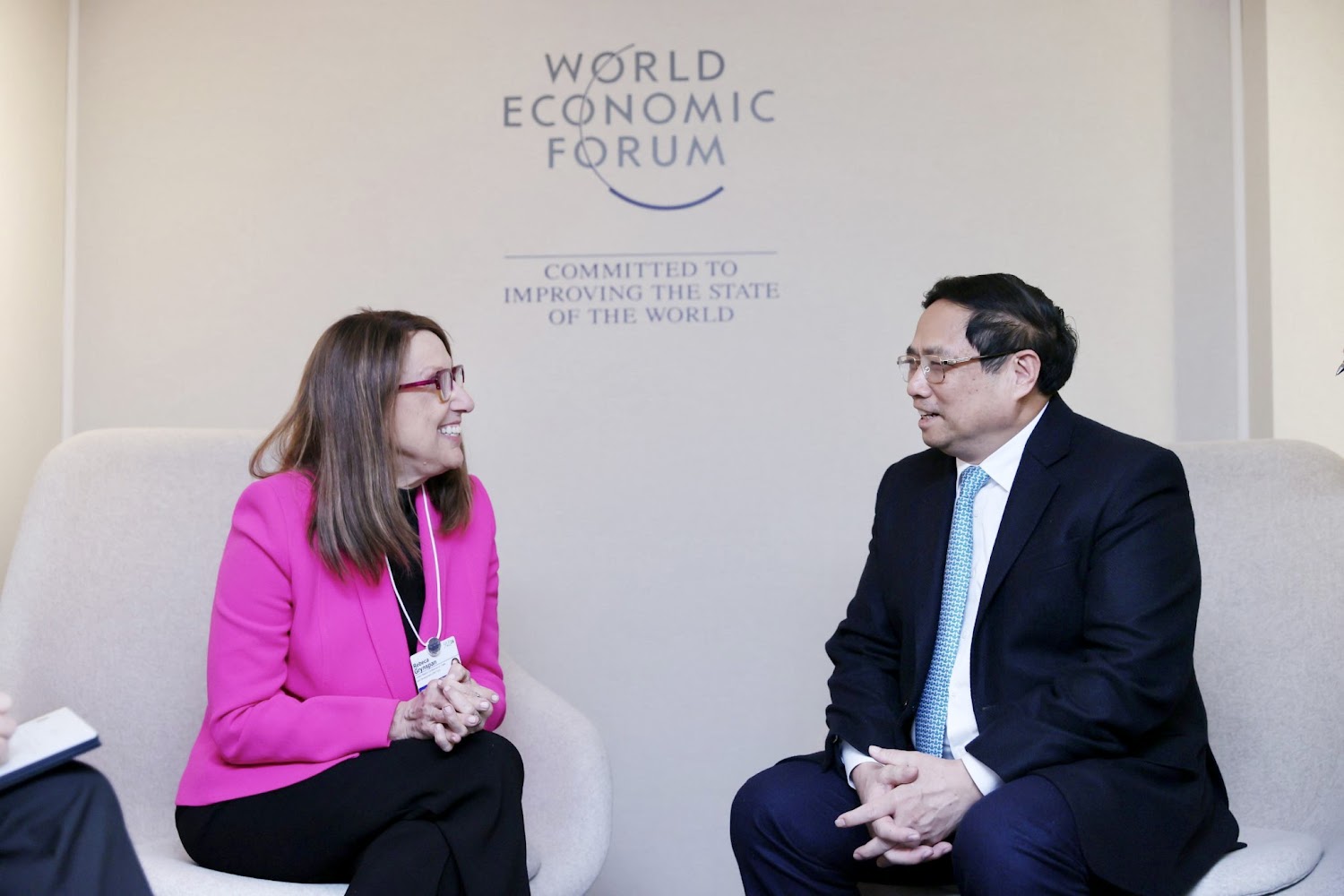
Ms. Rebeca Grynspan, Secretary-General of the United Nations Conference on Trade and Development (UNCTAD), said she had studied and was highly impressed by Vietnam’s development indicators, economic resilience, and macroeconomic stability—especially at a time when many countries are facing severe debt problems or very limited fiscal space. She noted that Vietnam has demonstrated a long-term vision that helps its economy remain resilient against shocks in an era of successive global crises. Vietnam is also on the right path to take advantage of the restructuring of global value chains and supply chains, positioning itself higher in the chain and moving up to higher levels of technology and value addition.
Regarding ASEAN, in agreement with Prime Minister Pham Minh Chinh’s remarks, the Thai Prime Minister stated that it was Prime Minister Pham Minh Chinh who suggested to Thailand and neighboring Laos, Cambodia, and Vietnam to jointly develop tourism under the concept of “four countries, one destination.”
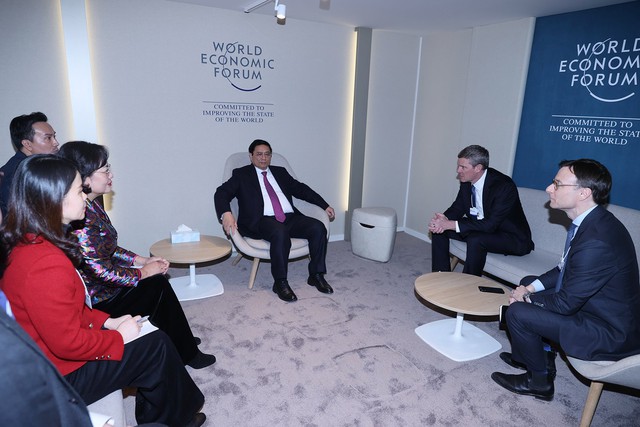

The official visits to Hungary and Romania immediately after attending WEF Davos by Prime Minister Pham Minh Chinh marked the first high-level exchange at the head-of-government level in seven years with Hungary and five years with Romania, in the context that Vietnam and both countries will celebrate the 75th anniversary of diplomatic relations in 2025.
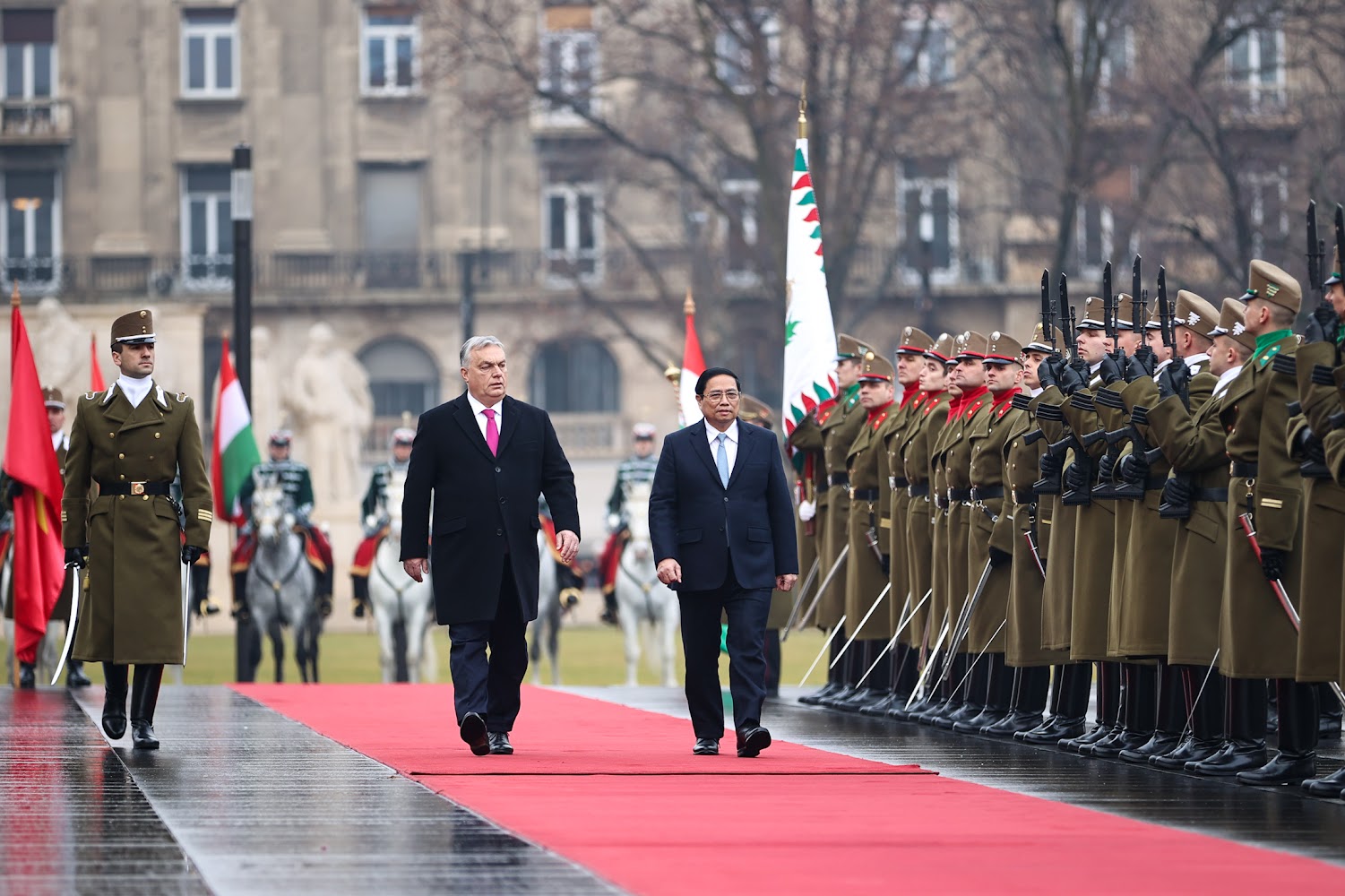
The visit aimed to continue strongly implementing the foreign policy guidelines of the Party and State, including prioritizing the strengthening and deepening of relations with comprehensive partners and traditional partners, contributing to enhanced political trust and promoting long-standing friendly relations with two Central and Eastern European countries across all fields.
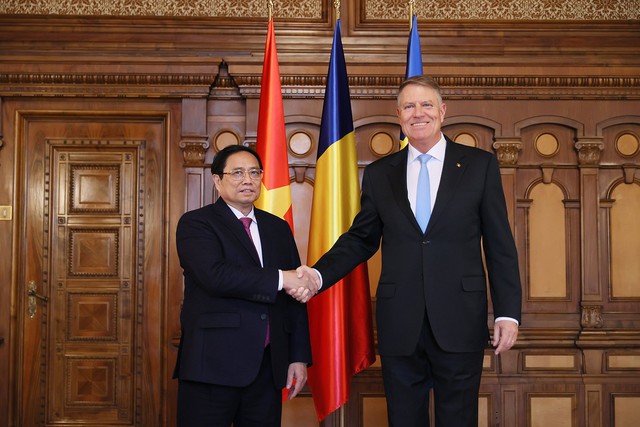
Both countries extended a warm, sincere, and friendly welcome to the Prime Minister, his spouse, and the high-level Vietnamese delegation as close friends. Within the framework of the visit, Prime Minister Pham Minh Chinh held more than 30 meetings and exchanges with senior leaders of the two countries’ states, governments, parliaments, and political parties, delivered policy speeches at universities, attended business forums, met with friendship associations, engaged with the Vietnamese communities, and visited several economic and scientific-technical institutions.
Leaders of Hungary and Romania expressed strong impressions of Vietnam’s socio-economic achievements, highly valued Vietnam’s growing international standing, and affirmed that Vietnam is a key partner in the Asia-Pacific region. They expressed their desire to further deepen bilateral relations in a substantive, effective, and practical manner, and to cooperate in addressing international issues and responding to global challenges.
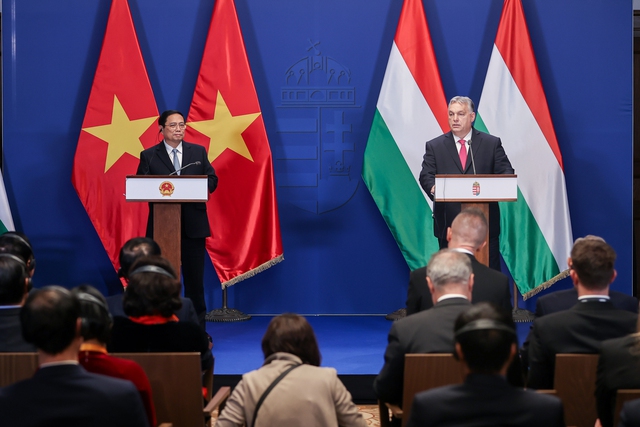
Public opinion in both countries expressed admiration for Vietnam’s heroism, historical tradition, and cultural identity. Hungarian Prime Minister Viktor Orbán assessed that Vietnam is developing strongly and is likely to become one of the leading countries in Asia. The Chairman of the Hungarian Workers’ Party described Vietnam as a model of the path toward socialism in the world under difficult conditions. Romanian Prime Minister Ion-Marcel Ciolacu affirmed that Vietnam is one of the most promising markets for Romania and suggested taking advantage of opportunities to make Romania a gateway for Vietnam into Europe.
Prime Minister Pham Minh Chinh repeatedly emphasized that Vietnam will never forget the sincere and meaningful support, assistance, and close cooperation of Romania and Hungary over nearly 75 years in many fields. Romania and Hungary were among the first countries in the world to recognize the Democratic Republic of Vietnam (now the Socialist Republic of Vietnam) and have always stood by Vietnam, even in the most difficult times.
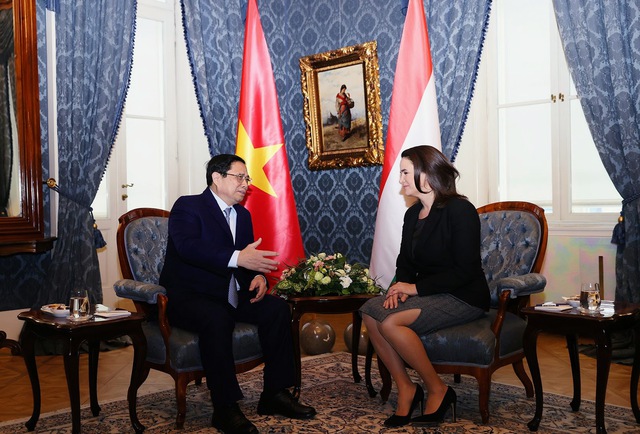
Most recently, Hungary and Romania were among the first countries to provide hundreds of thousands of COVID-19 vaccine doses to Vietnam during its most difficult period. Romania also played an active role in the signing of the Vietnam–EU Free Trade Agreement (EVFTA) on June 30, 2019 — the final day of Romania’s rotating presidency of the European Council. Hungary, meanwhile, was the first EU member state to ratify the EU–Vietnam Investment Protection Agreement (EVIPA). “Everything may pass, but friendship always remains. Everything is changing, but human-to-human affection does not change and continues to grow,” the Prime Minister shared with his friends.
Prime Minister Pham Minh Chinh and leaders of both countries agreed on many important measures to elevate the traditional friendship between Vietnam and Hungary and Romania to a new stage of development.
In terms of politics and diplomacy, Prime Minister Pham Minh Chinh and the leaders of the two countries agreed to strengthen delegation exchanges at all levels, especially high-level visits, across all channels of the Party, State, Government, and National Assembly, in order to enhance political trust and mutual understanding, laying the foundation for expanding cooperation in all fields.
In terms of economics, trade, and investment, the leaders affirmed their commitment to creating favorable conditions for businesses of both sides to enhance cooperation, particularly in Hungary’s strengths such as pharmaceuticals, agriculture, and information technology, and Romania’s strengths such as urban infrastructure development, communications, and food processing.
Hungary–Vietnam and Romania–Vietnam also agreed to further open their respective markets to agricultural products, food, and seafood, and to consider the implementation of investment cooperation and technology transfer projects in each country. Leaders of Hungary and Romania expressed support for the full and effective implementation of the EVFTA, affirmed their commitment to promoting the remaining EU member states to soon ratify the EVIPA, and called for the European Commission to soon lift the “yellow card” warning (IUU) on Vietnamese seafood exports.
Vietnam and the two countries also agreed to strengthen bilateral cooperation in traditional areas such as education and training, culture, sports, tourism, and labor, as well as in potential and emerging fields such as science and technology, information and communications, pharmaceuticals, innovation, and environmental protection.
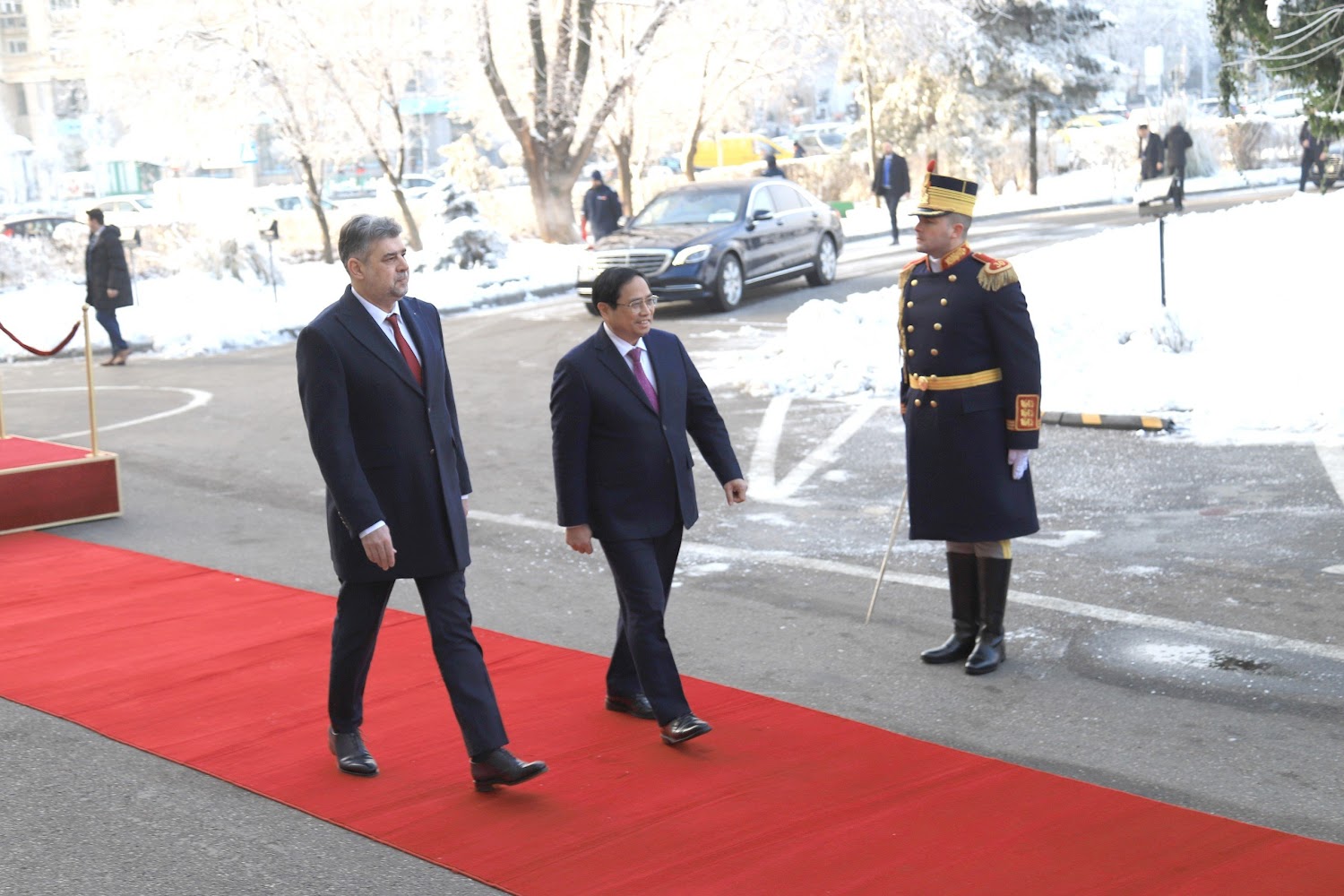
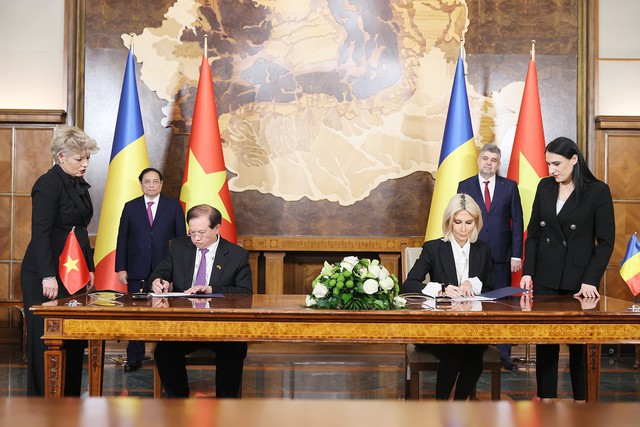
A series of cooperation documents in the fields of security, diplomacy, economy, culture, labor, agriculture, information and communications, and local-level cooperation between Vietnam and the two countries have been signed. A highlight of the visit was cooperation in education and training, with nearly 30 cooperation agreements signed between Vietnamese universities and educational institutions in Hungary and Romania.
The Prime Minister also held in-depth discussions with the leaders of both countries on regional and international issues of mutual concern. The countries agreed on the importance of resolving disputes through peaceful means, based on respect for international law.
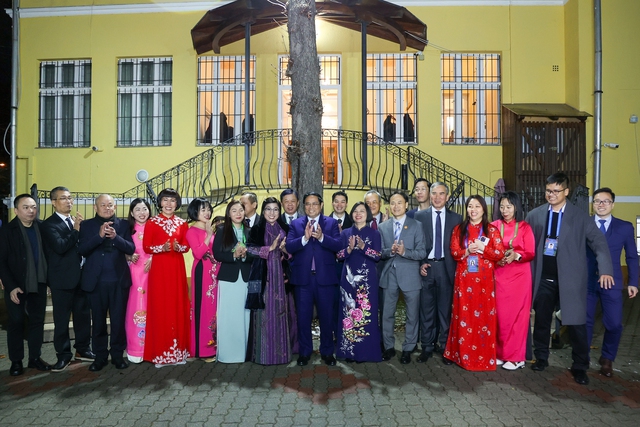
Meeting with the Vietnamese communities in Hungary and Romania, the Prime Minister welcomed overseas Vietnamese for their significant efforts in solidarity, mutual support, integration into host societies, and for always turning toward their homeland with the most heartfelt sentiments. The Prime Minister also directed the Vietnamese Embassies in both countries to continue to effectively carry out citizen protection work, and to support the community in business, livelihood, and integration, with the spirit of “treating the community’s affairs as one’s own family matters, and regarding compatriots as close relatives.” On this occasion, the Prime Minister proposed that Hungary soon recognize the Vietnamese community as an ethnic minority.
The Prime Minister’s official visits to Hungary and Romania mark an important milestone in the Comprehensive Partnership between Vietnam and Hungary, as well as the traditional friendship partnership between Vietnam and Romania, enhancing political trust and promoting comprehensive bilateral.
Following an extremely dynamic and successful 2023 for Vietnam’s diplomacy, marked by many historic achievements, the Prime Minister Phạm Minh Chính’s first overseas working trip in 2024 contributes to the continued effective implementation of the foreign policy guidelines set out in the 13th National Party Congress Resolution; the directives of the Party Central Committee Secretariat on promoting and elevating multilateral diplomacy toward 2030; and on economic diplomacy serving national development toward 2030. It also reflects the key guiding viewpoints in the newly released book by General Secretary Nguyễn Phú Trọng: Building and Developing a Comprehensive and Modern Vietnamese Diplomacy with the distinctive identity of the “Vietnamese bamboo”./.
Ha Van