(TSVN) – As a royal conglomerate from the Netherlands with more than 100 years of experience in global animal nutrition, having entered the livestock feed market in Vietnam in 2009, De Heus recognizes that Vietnam has the advantage to become one of the world’s most important suppliers of seafood.
Vietnam’s seafood market is on a strong upward trajectory
According to Vietnam’s Fisheries Development Strategy to 2030, with a vision to 2045, the sector is identified to develop into a key economic industry of the nation, producing large-scale commodities associated with industrialization and modernization, ensuring sustainable development and proactive adaptation to climate change. It aims to establish a rational production structure and organization with high productivity, quality, and efficiency; build reputable brands with strong competitiveness and international integration; continuously improve the material and spiritual well-being of the people while ensuring social security; and contribute to national defense, security, and the safeguarding of the country’s sovereignty over its seas and islands.
Vietnam is ranked as the world’s fourth-largest aquaculture producer, after China, Indonesia, and India. It is recognized as a major producer in the fisheries sector, both in aquaculture and offshore fishing, with a coastline of 3,260 km and an exclusive economic zone of 1 million km². Vietnam is well-positioned to become one of the world’s most important suppliers of aquatic protein. The domestic aquaculture market has been expanding, reaching 4.9 million tons in 2022, and is projected to grow at a compound annual growth rate (CAGR) of 1.8% from 2023 to 2028 (Source: IMARC Group – Vietnam Aquaculture Market: Industry Trends, Share, Size, Growth, Opportunity and Forecast 2023–2028).
Specifically in the animal feed sector, the country currently has 119 compound feed production facilities with a total designed capacity of 11.7 million tons; however, annual output is only about 5.4–5.6 million tons, of which approximately 3.5 million tons are for domestic aquaculture.
Intrinsic potential and development strategy of De Heus Group in the aquaculture industry
As a royal group from the Netherlands with over 100 years of experience in global animal nutrition, entering the animal feed market in Vietnam in 2009, De Heus recognized that Vietnam has the advantage to become one of the most important global suppliers of aquatic products. Accordingly, De Heus is committed to strengthening its strategic position in Vietnam together with domestic and international partners in the aquaculture sector in particular and the livestock industry in general.
With the motto “customer-centric,” De Heus goes far beyond the role of a conventional animal feed manufacturer. In addition to innovative, high-quality products, De Heus provides farmers with a wide range of services as well as nutritional and technological solutions to maximize support, delivering significant economic efficiency for livestock farms. All of these activities are carried out with the utmost attention to the environment and climate, as “sustainability” is the development trend of society, and De Heus clearly recognizes that we are all a part of it.

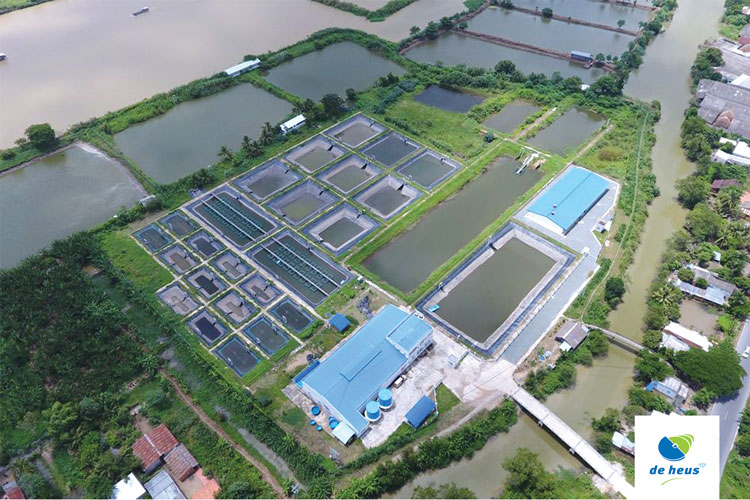
With the aim of meeting the demand for food from aquaculture products, supporting Vietnam’s aquaculture industry to develop sustainably and efficiently, and enhancing knowledge for fish farmers, processing facilities, and feed distributors, De Heus has taken the lead in aquaculture research and development in Vietnam. Its R&D centers are fully equipped with modern facilities, enabling the company to conduct research and experiments in aquaculture, such as testing and evaluating the nutritional value of raw materials, developing high-quality aquafeed formulations, and applying advanced farming solutions. These centers also provide training for farmers on pond management and best practices. Currently, De Heus experts at these centers have conducted numerous in-depth experiments on various species, including pangasius, red tilapia, snakehead fish, tilapia, climbing perch, catfish, pompano, carp, frogs, whiteleg shrimp, and black tiger shrimp.
Furthermore, through the acquisition of the Proconco brand at the end of 2021, De Heus has firmly strengthened its position, contributing to accelerating the development of the Proconco brand in aquaculture in particular and the livestock industry in general in the Vietnamese market. The integration of Proconco and De Heus is considered a strategic move aimed at promoting the development of Vietnam’s livestock and aquaculture sectors toward productivity, efficiency, and sustainability.
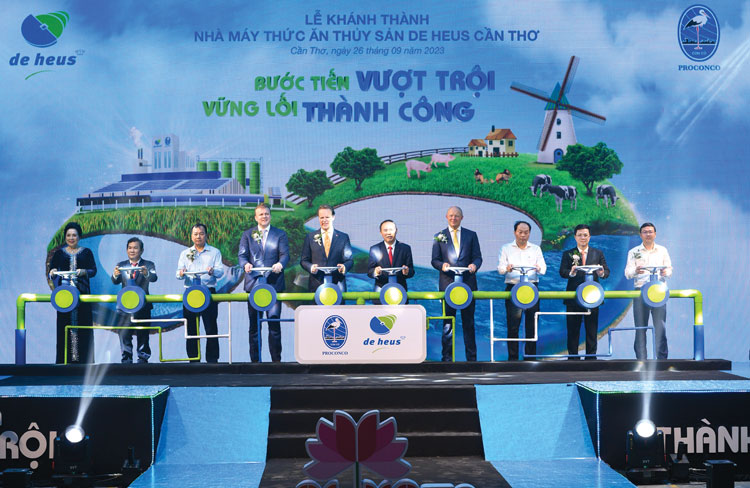
More recently, in September 2023, De Heus Group inaugurated a new aquafeed plant at Tra Noc Industrial Park in Can Tho. The De Heus Can Tho aquafeed plant is designed with a total capacity of 240,000 tons per year, specializing in feed production for pangasius. All products are manufactured using the most advanced technological lines from Europe and the United States. The entire production process, from input to output, is fully automated and strictly managed in accordance with ISO 22000, BAP, and GLOBAL G.A.P standards. In addition to advanced technology, the plant also benefits from a strategic location at a river port, providing a significant advantage in transporting raw materials to the factory and finished products to aquaculture farmers.
These are clear demonstrations of De Heus’s strong commitment to actively contributing to the development of Vietnam’s aquaculture industry, with the goal of building an efficient and sustainable livestock and aquaculture sector that can adapt to climate change, prioritize environmental protection, and remain competitive in the global market.
De Heus is committed to accompanying livestock farmers and aquaculture producers toward sustainable development
With breakthrough nutritional solutions and a deep understanding of both domestic and international markets, De Heus Vietnam is committed to continuously striving to help aquaculture farmers in Vietnam develop in an efficient and sustainable direction.
In addition, we also play a coordinating role in the value chain by supporting farmers in accessing top-quality genetic solutions, technical management solutions, and financial resources, as well as connecting them with consumer markets.
De Heus